Physical Alignment and the Mechanics of the Diaphragm
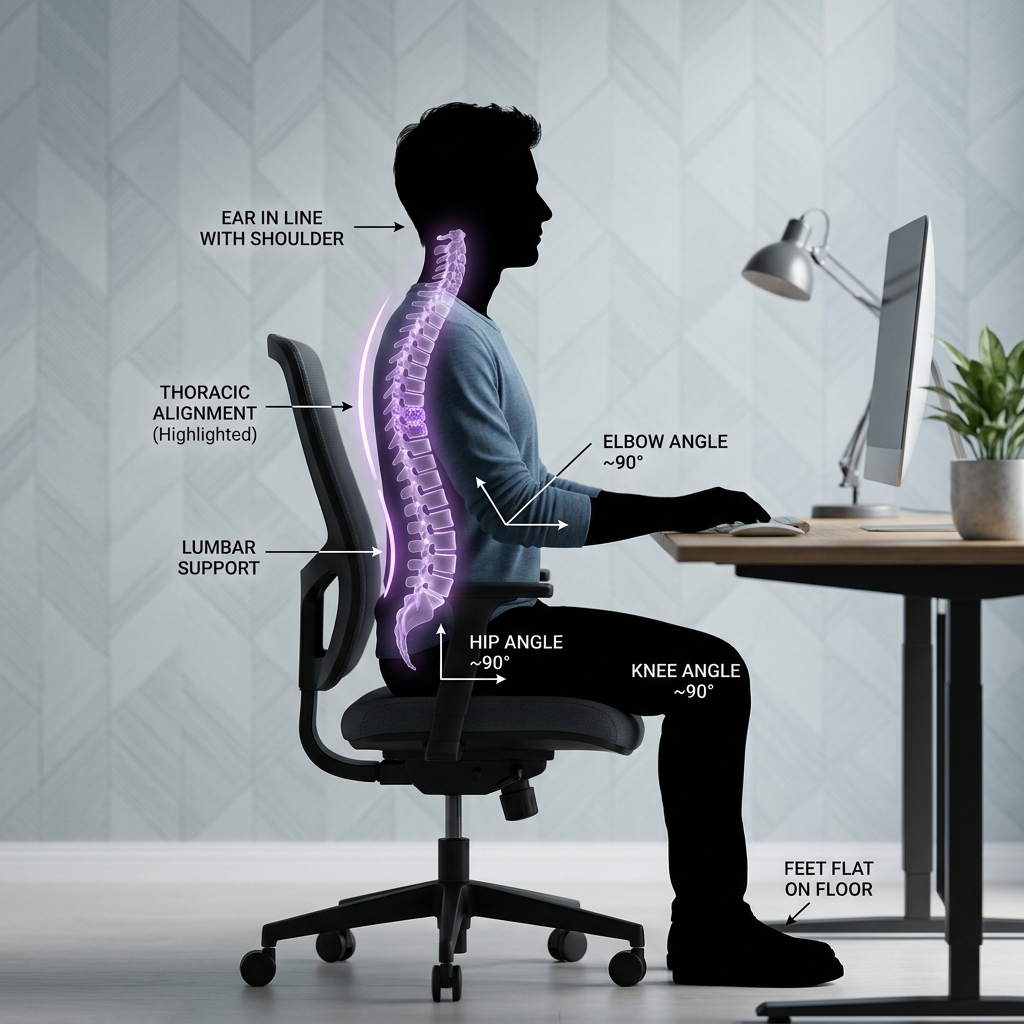
1. The Musculoskeletal Mechanics of Posture
The diaphragm is a dome-shaped muscle located at the base of the chest cavity. During healthy respiration, the diaphragm contracts and moves downward, drawing air deep into the lungs. Poor posture—such as slouched shoulders or a rounded spine—can compress the chest cavity, restricting this movement and leading to shallow breathing.
Shallow breathing forces the body to rely on secondary neck and shoulder muscles, which can lead to muscular tension and minor sympathetic stress responses. Correcting physical alignment helps release the diaphragm, allowing for deeper, more efficient breathing that supports relaxation.
2. Correcting Alignment for Deep Respiration
To support diaphragmatic breathing, focus on physical alignment during daily tasks. Keep your spine long, relax your shoulders, and open your chest. Adjust your workspace setup to support natural posture, and take regular breaks to stretch and check your alignment.
| Posture Position | Diaphragm Movement Range | Respiration Efficiency | Autonomic Response |
|---|---|---|---|
| Slouched / Compressed | Restricted downward contraction | Poor (shallow chest breathing) | Sympathetic dominance (SNS) |
| Aligned / Upright | Full downward contraction | Optimal (diaphragmatic breathing) | Parasympathetic activation (PNS) |
| Prone (Lying Down) | Natural breathing movement | Excellent (automatic deep breathing) | Deep relaxation / Rest state |
3. Implementing Physiological Guidelines
Integrating these principles into your daily routine is straightforward. Start by identifying one or two areas where you can make small, consistent adjustments. Focus on establishing a regular sleep schedule, staying hydrated, and taking brief recovery breaks during the day. Over time, these practices will become automated habits that support your biological balance and overall well-being.
Remember that consistency is key. Small, daily choices have a powerful cumulative effect on your health. By prioritizing these supportive habits, you build the physiological reserve necessary to meet daily challenges with energy and focus.
- Workspace setup: Adjust chair and monitor heights to support posture.
- Alignment checks: Take short breaks to check and correct physical alignment.
- Deep breathing: Practice diaphragmatic breathing in an upright position.
- Gentle stretching: Use stretching to help release shoulder and chest tension.
Written & Reviewed by Sarah Jenkins
Certified Sleep Science Coach & Integrative Wellness Counselor
Sarah has over a decade of clinical experience guiding clients through biological clock alignment, autonomic breath training, and mindfulness strategies to support longevity.
Ready to Track Your Daily Progress?
Use our Daily Self-Care Habit Scorecard to align your evening routines, breathwork, and sleep patterns with healthy biological ranges.
Open Habit Scorecard