Yoga Nidra: The Science of Conscious Non-Sleep Deep Rest
1. The Neurology of Yoga Nidra
Yoga Nidra, or conscious sleep, is a mindfulness practice that guides you into a state of deep physiological relaxation while maintaining awareness. From a neurological perspective, Yoga Nidra helps transition brain waves from active beta states to relaxed alpha and theta states. This transition supports the body's natural recovery and restoration systems.
This practice helps stimulate the parasympathetic nervous system, triggering the release of acetylcholine and lowering heart rate. By encouraging deep relaxation, Yoga Nidra helps quiet the brain's stress response, providing a restorative break for the mind and body.
2. Incorporating Yoga Nidra into Your Day
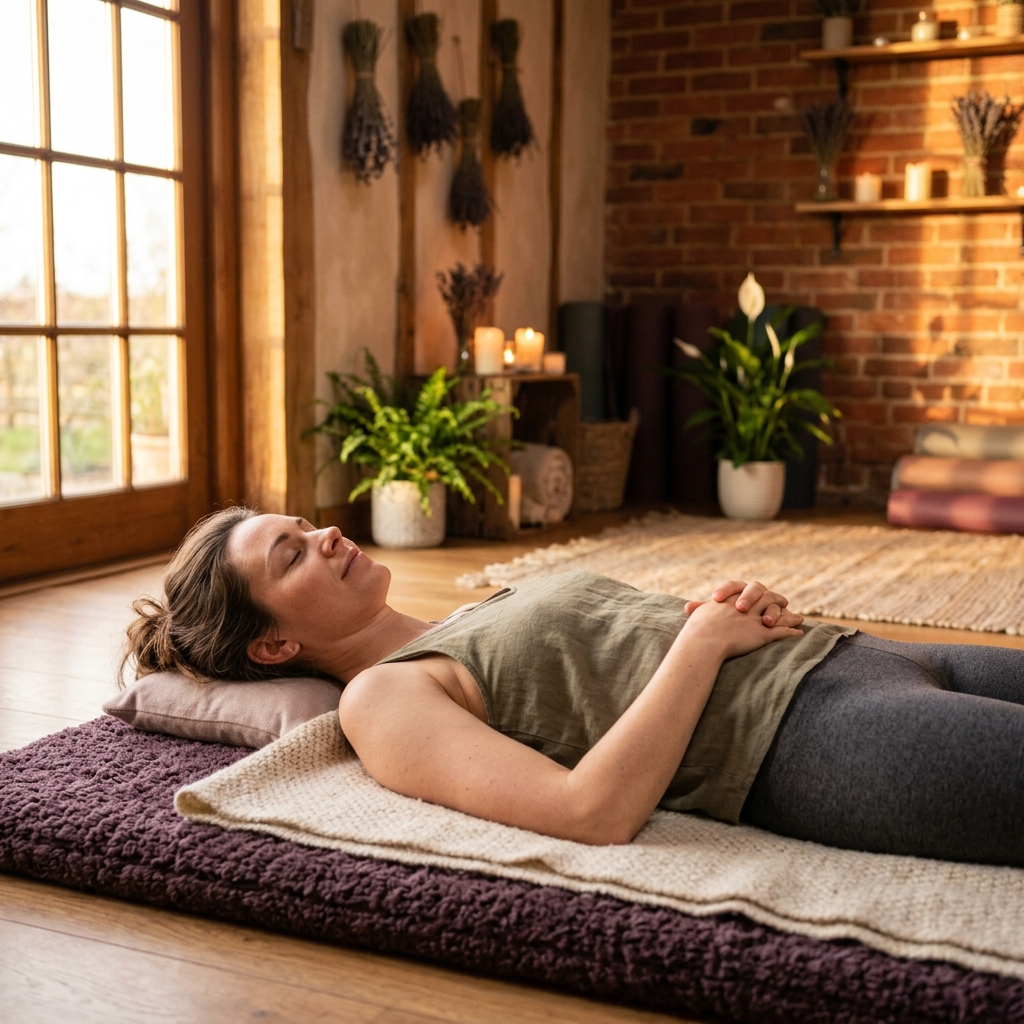
To practice Yoga Nidra, lie down in a comfortable position in a quiet, dark space. Follow a guided audio session, focusing your attention on different bodily sensations and breathing patterns. Keep your body completely still to allow the nervous system to transition into a deep recovery state.
| Relaxation Phase | Dominant Brain Wave Pattern | Autonomic State | Physiological Effect |
|---|---|---|---|
| Sensory Withdrawal | Alpha waves (8 - 12 Hz) | Parasympathetic transition | Calms the mind, releases surface tension |
| Breath awareness | Theta waves (4 - 8 Hz) | Deep rest state (PNS) | Deepens relaxation, slows heart rate |
| Conscious Sleep | Borderline Delta (1 - 4 Hz) | Maximum autonomic recovery | Supports brain clearing and cell repair |
3. Implementing Physiological Guidelines
Integrating these principles into your daily routine is straightforward. Start by identifying one or two areas where you can make small, consistent adjustments. Focus on establishing a regular sleep schedule, staying hydrated, and taking brief recovery breaks during the day. Over time, these practices will become automated habits that support your biological balance and overall well-being.
Remember that consistency is key. Small, daily choices have a powerful cumulative effect on your health. By prioritizing these supportive habits, you build the physiological reserve necessary to meet daily challenges with energy and focus.
- Prone position: Lie down comfortably on your back with support.
- Guided sessions: Use a recorded guide to help lead the practice.
- Complete stillness: Keep your body quiet to support brain wave shifts.
- Regular sessions: Practice 2-3 times weekly to help manage chronic stress.
Written & Reviewed by Sarah Jenkins
Certified Sleep Science Coach & Integrative Wellness Counselor
Sarah has over a decade of clinical experience guiding clients through biological clock alignment, autonomic breath training, and mindfulness strategies to support longevity.
Ready to Track Your Daily Progress?
Use our Daily Self-Care Habit Scorecard to align your evening routines, breathwork, and sleep patterns with healthy biological ranges.
Open Habit Scorecard